With the proposed park and ride at J21 Weston it would depent where the public transport would run to. If BRS Airport then would make a little difference to airport parking. But there is pax from many different directions that would use car parks or public transport to airport.There is a main line rail line close by with a Worle Parkway ,With plans being prepared to lengthen platforms.

Navigation
Install the app
How to install the app on iOS
Follow along with the video below to see how to install our site as a web app on your home screen.
Note: This feature may not be available in some browsers.
More options
You are using an out of date browser. It may not display this or other websites correctly.
You should upgrade or use an alternative browser.
You should upgrade or use an alternative browser.
Road, Rail & Access Issues
- Thread starter Aviador
- Start date
- Tagged users None

TheLocalYokel
Honorary Member Of Forums4airports
- Jan 14, 2009
- 15,711
- 343
- IMPORTANT!! To reduce spam, we request that you make a post soon after completing your registration. We request you keep your account active by posting regularly. Inactive accounts risk being deleted.
- Yes
- Admin
- #342
It seems the idea is to connect the airport and the proposed J21 park and ride with a fleet of regular buses. In effect it would be another offsite car park but on a larger scale to those that are currently in operation and which are connected to the airport by minibuses.With the proposed park and ride at J21 Weston it would depent where the public transport would run to. If BRS Airport then would make a little difference to airport parking. But there is pax from many different directions that would use car parks or public transport to airport.There is a main line rail line close by with a Worle Parkway ,With plans being prepared to lengthen platforms.
If someone is driving from, say, Devon or even north of Bristol or from South Wales and already using the M5 at some point, would it be an attractive proposition to park up at junction 21 rather than drive to an onsite airport car park or to one of the smaller offsite car parks already operating that are closer to the airport than J 21? In the end I suppose the defining factor will be cost for most people.
I can't see it being attractive from any direction.
From North Bristol/South Wales, it's only about 20 mins from J19 at Portbury to the Airport and probably 20-25 mins from J18 Avonmouth to the Airport. Even less when the roads are quiet. Driving the extra Southbound towards J21 will add on probably 15 minutes alone, then once parked you'll need to come back on yourself up the A370 and Brockley combe to get to the Airport.
I'm not sure what the best route is from the South but looking at googlemaps I would assume coming off at J22 and following the A38 all the way to the Airport would be best. Carrying on to J21 is likely going to add on time then navigating the slower A370/Brockley Combe by bus.
The A38 is becoming an increasing traffic problem, especially from Barrow Gurney up towards the Airport. Would it be better to utilise an off site park and ride closer to Bristol City (Portway?) and have regular buses running from there to the Airport. The infrastructure is already there and can be a combined facility for the city centre. It would help reduce traffic along Portway/Brunel Way and the new A370 link and is already on the designated route coming from the North/South Wales.
From North Bristol/South Wales, it's only about 20 mins from J19 at Portbury to the Airport and probably 20-25 mins from J18 Avonmouth to the Airport. Even less when the roads are quiet. Driving the extra Southbound towards J21 will add on probably 15 minutes alone, then once parked you'll need to come back on yourself up the A370 and Brockley combe to get to the Airport.
I'm not sure what the best route is from the South but looking at googlemaps I would assume coming off at J22 and following the A38 all the way to the Airport would be best. Carrying on to J21 is likely going to add on time then navigating the slower A370/Brockley Combe by bus.
The A38 is becoming an increasing traffic problem, especially from Barrow Gurney up towards the Airport. Would it be better to utilise an off site park and ride closer to Bristol City (Portway?) and have regular buses running from there to the Airport. The infrastructure is already there and can be a combined facility for the city centre. It would help reduce traffic along Portway/Brunel Way and the new A370 link and is already on the designated route coming from the North/South Wales.
TheLocalYokel
Honorary Member Of Forums4airports
- Jan 14, 2009
- 15,711
- 343
- IMPORTANT!! To reduce spam, we request that you make a post soon after completing your registration. We request you keep your account active by posting regularly. Inactive accounts risk being deleted.
- Yes
- Admin
- #344
The A38 and A370 are always going to be heavily traffic-logged at commuter time. I suspect that most people coming from Devon do leave the M5 at junction 22 (East Brent) and travel the 14 miles to the airport along the A38. With its many speed limits (two at 30 mph) and sets of traffic lights it's by no means a fast road as it climbs over the western Mendip Hills with a couple of tight bends thrown in for good measure.
The alternative is leaving at junction 21 (Weston) and using the A370 to the Brockley Combe turn-off, thence to the airport but that entails getting out of Downside Road onto the A38, a frustrating experience at certain times of the day even with the traffic lights that were installed a few years ago.
The Airport-operated A3 Weston Flyer takes the A370-Brockley Combe route after leaving Weston but it has the advantage of entering the airport via the 'back entrance' further along Downside Road. I doubt that the airport would be keen on letting buses from a competitor park and ride do that unless they pay a significant fee. I'm told that the A4 Bath Air Decker pays a per passenger charge to the airport and that service complements the airport's business.
I agree that the J21 park and road proposal raises more questions than it answers. The only real answer would be light rail or tram straight into the airport but that is a very long way from happening, if it ever does. Even then, people who drive in from distant areas would still need somewhere to park their car.
I would be surprised if this proposal ever went ahead even if planning permission was granted, which is by no means certain.
The alternative is leaving at junction 21 (Weston) and using the A370 to the Brockley Combe turn-off, thence to the airport but that entails getting out of Downside Road onto the A38, a frustrating experience at certain times of the day even with the traffic lights that were installed a few years ago.
The Airport-operated A3 Weston Flyer takes the A370-Brockley Combe route after leaving Weston but it has the advantage of entering the airport via the 'back entrance' further along Downside Road. I doubt that the airport would be keen on letting buses from a competitor park and ride do that unless they pay a significant fee. I'm told that the A4 Bath Air Decker pays a per passenger charge to the airport and that service complements the airport's business.
I agree that the J21 park and road proposal raises more questions than it answers. The only real answer would be light rail or tram straight into the airport but that is a very long way from happening, if it ever does. Even then, people who drive in from distant areas would still need somewhere to park their car.
I would be surprised if this proposal ever went ahead even if planning permission was granted, which is by no means certain.
If I remember correctly there were also some bigger road schemes in the planning or at least under consideration for the entire area between the M5 and the airport, including a new motorway junction or a moved junction or somesuch, so this might possibly make more sense in conjunction with that (though seeing that it's being pushed by another group it's not clear to me if this is just an attempt by said group to get a slice of the airport car parking revenue).
TheLocalYokel
Honorary Member Of Forums4airports
- Jan 14, 2009
- 15,711
- 343
- IMPORTANT!! To reduce spam, we request that you make a post soon after completing your registration. We request you keep your account active by posting regularly. Inactive accounts risk being deleted.
- Yes
- Admin
- #346
Recently North Somerset Council agreed a £1.23 million scheme to widen the northbound access road onto the M5 at junction 21 in the hope that it will at least partly alleviate the traffic jams, especially in the mornings. Whether the new apparently more green and environmentally aware council will rescind that decision I don't know. I can't think why they would.If I remember correctly there were also some bigger road schemes in the planning or at least under consideration for the entire area between the M5 and the airport, including a new motorway junction or a moved junction or somesuch, so this might possibly make more sense in conjunction with that (though seeing that it's being pushed by another group it's not clear to me if this is just an attempt by said group to get a slice of the airport car parking revenue).
The Joint Spatial Plan envisages a new junction 21A near Weston which would go hand in hand with a Banwell bypass (such a bypass was being talked about in the 1950s when I went to school at Weston via Banwell). It's all to do with creating access to the extra 25,000 homes the JSP believes are needed in North Somerset between now and 2036.
Banwell, Churchill and Langford feature heavily as locations for many of these new houses. Unsurprisingly, many of the residents in those villages don't want any more houses and there have been calls from groups in the area for them to be built the edge of Bristol instead. Again unsurprisingly, residents living on the edge of that part of Bristol, which is already earmarked for many new homes as part of both Bristol's and North Somerset's contribution to the 100,000 new homes the JSP requires in the wider area, are not impressed with that argument.
It will be interesting, and instructive, to follow the new North Somerset authority's attitude to all this.
I think your suggestion regarding the park and ride proposers' reasons is probably correct. Can't blame them - they no doubt see it as a perfectly legitimate business opportunity.
Going back to the question of access from the M5 to the airport which we touched on early this week, by sheer coincidence I was walking at Downside Road this morning when a coach based in North Devon (it's a company that is often seen at BRS carrying groups of airline passengers) came along the road from the direction of Brockley Combe carrying passengers and heading towards the A38 (it drove past the 'back entrance' to the airport presumably because it is not authorised to use it). This suggests that this coach driver took the J 21/A370 route rather than the J 22/A38 route when coming from Devon. It would be the route that park and ride buses would take were the facility approved and built.
There was back a few years that Brockley Combe was to be looked at a total remodel from A378 to A38 with various roads around altered as well.The A370 fromJ21 to Brockley Combe junction would not be a problem.The major hurdle would be money. Like wise the same could be done from the Bristol direction.
TheLocalYokel
Honorary Member Of Forums4airports
- Jan 14, 2009
- 15,711
- 343
- IMPORTANT!! To reduce spam, we request that you make a post soon after completing your registration. We request you keep your account active by posting regularly. Inactive accounts risk being deleted.
- Yes
- Admin
- #348
There is also talk of turning the M5 into a 'smart' motorway between Weston and Bristol. A section of the M5 (junctions 15-17) and a section of the M4 (junctions 19-20) around Almondsbury Interchange were turned into smart motorways a few years ago. The seven miles of motorway involved cost a total of £88 million to convert.There was back a few years that Brockley Combe was to be looked at a total remodel from A378 to A38 with various roads around altered as well.The A370 fromJ21 to Brockley Combe junction would not be a problem.The major hurdle would be money. Like wise the same could be done from the Bristol direction.
Currently there is a four-year programme under way to turn a 32-mile stretch of the M4 between junctions 3 and 12 into a smart motorway - that's costing £850 million.
Converting the M5 between, say, junction 21 at Weston and junction 17 (Cribbs/Bristol West) to link up with the already-converted section of smart motorway going north from junction 17 would involve a distance of about 18 miles.
On a different topic, I noticed yesterday that one of the A2 buses that operates between the airport and city centre (Air Connect) was a liveried double-decker (different livery to the A1). Until now they have used single-deckers with at least one in an Air Connect livery. The A2 seems well patronised when I see it. I don't know if the intention was always to turn the service into a double-decker route.
There must now be almost as many bus services operating along the A38 between the airport and city boundary, from where they go their own different ways at the Lime Kiln Roundabout, as when I was a lad in the 1950s. They are the A1 (Airport Flyer), A2 (Air Connect), A4 (Bath Air Decker), South West Falcon (Plymouth/Exeter/Taunton-Bristol via airport) and U2 (University vet school at Langford-Clifton that serves the Lulsgate Bottom stop near the airport) - all in separate identifying liveries and all double-deckers except the Falcon which is a big coach but picks up at all bus stops. There is also the National Express to South Wales that operates about 10 x daily but doesn't pick up at the en-route bus stops along the A38.


- Thread starter
- Admin
- #349
Much of the M62 and M1 near Leeds has been turned into "smart" motorway. It does seem to keep traffic flowing but some would argue it comes at a cost to safety as a large proportion of the motorway hard-shoulder becomes usable during peek periods. You still get the occasional idiot who thinks the speed restrictions don't apply to them but smart motorways also tends to be littered with speed cameras with variable speed detection. On the whole I's say it's a good idea.
Incidentally, I'd come to this part of the forum to make people aware of roadworks close to the airport.
During the weekend of Saturday 15 and Sunday 16 June 2019 the local council will be conducting surface dressing to the A38. (they pick their times don't they)
Incidentally, I'd come to this part of the forum to make people aware of roadworks close to the airport.
During the weekend of Saturday 15 and Sunday 16 June 2019 the local council will be conducting surface dressing to the A38. (they pick their times don't they)
TheLocalYokel
Honorary Member Of Forums4airports
- Jan 14, 2009
- 15,711
- 343
- IMPORTANT!! To reduce spam, we request that you make a post soon after completing your registration. We request you keep your account active by posting regularly. Inactive accounts risk being deleted.
- Yes
- Admin
- #350
https://www.bristolairport.co.uk/ab...2019/6/key-bristol-airport-route-gets-upgrade
Snag is there is not really a good time to resurface this stretch of road unless it was done through the night and that would no doubt lead to complaints from residents along the route whose sleep was disturbed.
In the week the A 38 between Bristol and the villages and small towns around the airport is heavily used by commuter traffic, not to mention vehicles bound to and from the airport. For much of its length between the city bounday and airport the A 38 is single-lane in each direction, not much more than a country lane really.
Snag is there is not really a good time to resurface this stretch of road unless it was done through the night and that would no doubt lead to complaints from residents along the route whose sleep was disturbed.
In the week the A 38 between Bristol and the villages and small towns around the airport is heavily used by commuter traffic, not to mention vehicles bound to and from the airport. For much of its length between the city bounday and airport the A 38 is single-lane in each direction, not much more than a country lane really.
Just shows you how traffic has increased over the years. The A38 was the main trunk route to Devon and Cornwall.Every summer before the M5 was built traffic was backed up from Cornwall to well past Bristol.The A38 is not a good road for the airport at times,so just shows how traffic has increased.
TheLocalYokel
Honorary Member Of Forums4airports
- Jan 14, 2009
- 15,711
- 343
- IMPORTANT!! To reduce spam, we request that you make a post soon after completing your registration. We request you keep your account active by posting regularly. Inactive accounts risk being deleted.
- Yes
- Admin
- #352
Traffic has certainly increased in recent decades as the villages grow even larger leading to more and more commuters to/from Bristol and to/from the airport, but when the A38 was the main conduit from the North/Midlands to the further South West the traffic was just as heavy then in terms of volume over any specific stretch.Just shows you how traffic has increased over the years. The A38 was the main trunk route to Devon and Cornwall.Every summer before the M5 was built traffic was backed up from Cornwall to well past Bristol.The A38 is not a good road for the airport at times,so just shows how traffic has increased.
We lived right on the A38 at Redhill through the 1950s and lorries rumbled past our cottage day and night. In fact, when we went on holiday we sometimes found it difficult to sleep because of the lack of background traffic noise. At summer weekends there was often slow-moving or stationary traffic all the way between Churchill crossroads on the edge of the Mendips and Bristol. The A 38 is a country lane to an extent even now, but in the 50s and early 60s it was worse in that the very long hills at Barrow and Redhill have been widened since then and are now three-lane for much of their length which was not the case 60 years ago.
Pre-M5, the Exeter bypass was another monumental traffic jam which, as you have pointed out, could help to make a journey from the Bristol area to Cornwall a nightmare and probably just as long time-wise, perhaps longer on occasions, as along the M5 these days at the beginning of a holiday weekend which can be hellish.
When the M5 was complete open noteably the Avonmouth bridge the highways agency detrunked the A38. The upkeep of the said road was passed to local councils to look after it. Before they passed over the road it got modified in places and resurfaced. Look at the whole road now its rough in places and no alterations done,must be down to local council spending. The other main thing that was passed was the winter salting.
TheLocalYokel
Honorary Member Of Forums4airports
- Jan 14, 2009
- 15,711
- 343
- IMPORTANT!! To reduce spam, we request that you make a post soon after completing your registration. We request you keep your account active by posting regularly. Inactive accounts risk being deleted.
- Yes
- Admin
- #354

The M5 is currently closed in both directions between junction 22 (Burnham-on-Sea-East Brent) and junction 23 (Bridgwater North-Dunball) because of an issue with overhead power lines. Delays of one hour are reported and Bristol Airport is advising passengers to allow more time to reach the airport.
The diversion route is along the adjacent A38 between junctions 22 and 23 of the M5.
TheLocalYokel
Honorary Member Of Forums4airports
- Jan 14, 2009
- 15,711
- 343
- IMPORTANT!! To reduce spam, we request that you make a post soon after completing your registration. We request you keep your account active by posting regularly. Inactive accounts risk being deleted.
- Yes
- Admin
- #356
I don't see many vehicles at the traffic lights waiting to come out onto the A38 at the bottom of Barrow Hill. I believe the fuss about Barrow Gurney village was always exaggerated. There was doubtless quite a lot of airport traffic but the number of vehicles per day said to be cutting through the village to reach and leave the airport would have meant that nearly every person using the airport would have driven through Barrow Gurney, no doubt including Adge Cutler's brother Ernie.Sinse the setion of link road opened I have not heard any one say any thing about Barrow Guerney. Is there a lot of traffic still go that way not connected with the airport.
Whilst on the subject of airport access, there are notices plastered across the bus stops on the dedicated busway part of the A1 route saying the busway will be closed from tomorrow until Friday for work to be carried out on the guided busway sections.
These are the very same sections that caused a delay in the opening of the busway last year because the guided sections were of the wrong width or height or both (I forget which). It cost another £200,000 to put right. How much the latest work will cost I don't know.
The ridiculous thing is that the guided sections aren't even necessary operationally. In fact, they slow the buses down. They were built to satisfy funding conditions. Without them the route would have been an ordinary bus route and the government would not have provided some of the cash. You couldn't make it up. Well, you could - in 'Yes Minister'.
The A1 and Metrobus M2 will be diverted via the Cumberland Basin and A 370.
A lot of regular users from the North / West that are familiar with the route use Barrow Gurney by coming off at Gordano services, especially minibus companies from South Wales. It's also one of the quicker routes on sat navs.

- Moderator
- #358
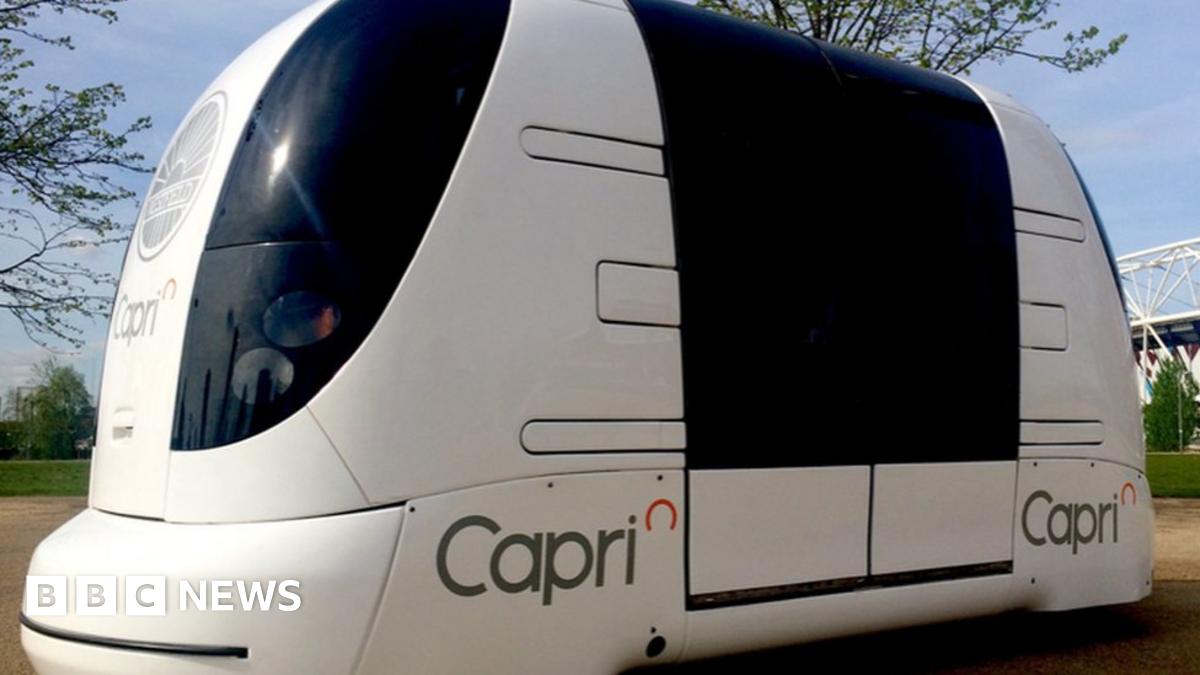
Bristol Airport tests driverless pods on shared roads
It is hoped the pods will eventually replace busses carrying passengers around Bristol Airport.
 www.bbc.co.uk
TheLocalYokel
Honorary Member Of Forums4airports
- Jan 14, 2009
- 15,711
- 343
- IMPORTANT!! To reduce spam, we request that you make a post soon after completing your registration. We request you keep your account active by posting regularly. Inactive accounts risk being deleted.
- Yes
- Admin
- #359
Airport press release now on the BRS website.Bristol Airport tests driverless pods on shared roads
It is hoped the pods will eventually replace busses carrying passengers around Bristol Airport.

Capri Autonomous Vehicle showcased at Bristol Airport
Bristol Airport hosted a Capri autonomous pod as part of its Autonomous Vehicle Breakfast Meeting today, giving key stakeholders an opportunity to better understand the future of connected and autonomous vehicles at airports.
 www.bristolairport.co.uk
Capri Autonomous Vehicle showcased at Bristol Airport
Created: 8th Jul 2019
Bristol Airport hosted a Capri autonomous pod as part of its Autonomous Vehicle Breakfast Meeting today, giving key stakeholders an opportunity to better understand the future of connected and autonomous vehicles at airports.

The event began with an introduction from Dave Lees, CEO of Bristol Airport, who started the session by highlighting the opportunities that flying creates for millions by connecting people in an international world and giving people freedom. Balanced alongside this however the Airport also has a key responsibility in ensuring that this is achieved in a responsible manner including moving quicker towards a lower carbon future.
This was followed by a summary of the overall Capri project by George Lunt (AECOM), project manager of Capri. He emphasised the role of airports as a prime “early adopter” for the roll-out of connected and autonomous vehicles in the public domain.
The presentations closed with a closer look at the technical aspects of the pod by Julian Turner, CEO of Westfield Technology Group, who are responsible for the build of the pods and development of the Autonomous Control System. A brief introduction to new battery technology being trialled within the pod was given and other environments in which the pods have been deployed were summarised. The challenges faced so far in public pod operations were highlighted, with emphasis on the impact an unfamiliar pod has on pedestrian and cyclist behaviour.
Capri has been working with Bristol Airport over the past six months to develop a business case for autonomous pods on its site. A phased approach that will progress with improvements in the technical capability of autonomous vehicles is being considered. This work has included passenger engagement and questionnaires, led and developed by the University of West England.
The pod’s first public appearance will take place in later this year at the Queen Elizabeth Olympic Park, a diverse estate that includes retail, recreation, residential and business centres. This will be shortly followed by a trial around The Mall at South Gloucestershire’s Cribbs Causeway retail park. The project will culminate in an on-road public trial at London’s Queen Elizabeth Olympic Park in 2020.
Focusing on trips of up to five miles to connect people to places, Capri is developing the next generation of autonomous pods, as well as the systems and technologies that will allow the vehicles to navigate safely and seamlessly in both pedestrian and on-road environments, known as ‘dual-mode’. The consortium is looking at how the network can harness data to enable location, positioning and on-demand services to help support a wider rollout of dual-mode autonomous pods.
George Lunt, Technical Director, AECOM, said: “Connected and autonomous vehicles are predicted to make a huge impact on society, but require significant research and development to support their future commercial use. With a wide range of potential markets for on-demand mobility services, our project has clear economic benefits that will inform the business cases for these types of schemes. Our work with Bristol Airport is an important stage of the project as we look in detail at the underlying operating models required to deliver a viable service.”
The Capri consortium consists of a team of experts including global enterprises with established multidisciplinary expertise, academic institutions at the cutting-edge of automotive research, and SMEs developing exciting new technology solutions. A large number of consortium partners are based in the West of England, putting the region at the forefront of this rapidly developing sector.
Capri is an AECOM-led consortium that was awarded funding from Innovate UK and the Centre for Connected & Autonomous Vehicles (CCAV). It was awarded the funding as part of a competition to invest £35 million in industry-led research and development projects on CAVs. The aim of the competition was to find projects that would deliver technical solutions for CAVs that provide real-world benefits to users and where the commercial benefit is clear.
TheLocalYokel
Honorary Member Of Forums4airports
- Jan 14, 2009
- 15,711
- 343
- IMPORTANT!! To reduce spam, we request that you make a post soon after completing your registration. We request you keep your account active by posting regularly. Inactive accounts risk being deleted.
- Yes
- Admin
- #360
Bristol Airport to introduce new public transport services to Nailsea and Clevedon
Bristol Airport announces plans to trial a new, innovative public transport service for passengers and staff. One service will provide a new connection from Nailsea and Backwell train station to the Airport. Whilst another service will start in Clevedon, stopping at Yatton train station and...
www.bristolairport.co.uk
Airport press release issued today re a new 'innovative' transport service for passengers and staff that could begin next year for a six-month trial period to gauge demand. The timetabled service will reflect airline timetables and employee rosters. One route will operate from Clevedon via Yatton station and the other from Nailsea via Nailsea & Backwell station.
A few years ago the previous A2 route (now Air Connect to the city centre) operated between Clevedon (and alternately Portishead) to the airport and on to Weston. The Clevedon and Portishead legs didn't last very long as they were not commercially viable.
An airport spokesman said, “The Bristol Flyer started life as a minibus when the service commenced and has grown in popularity to the extent that in 2018 over 800,000 journeys were made. We’re hopeful the trials will be as successful.” Except it didn't.
I have in front of me the summer 1998 edition of the airport magazine of the time Airborne which carries an article about the new 'Bristol Flyer' service that was about to launch, illustrated with a photograph of one of the liveried coaches. The new 'Flyer' service was to be operated by a fleet of 50-seater coaches at 20-minute intervals during peak hours and every 30 minutes at off-peak. What the airport might be thinking of is a previous initiative that pre-dated the 'Flyer' when mini buses in National Express livery connected the city and airport. This service is mentioned in Issue 1 of Bristol Airport News (late 1992) an earlier newspaper-like publication produced by the airport.
The airport spokesman also detailed other transport improvements designed to mitigate the traffic impact that include support for new bus and coach services, highway improvements and a bus lane on the A38.
Bristol Airport to introduce new public transport services to Nailsea and Clevedon
Created: 8th Aug 2019

Whilst another service will start in Clevedon, stopping at Yatton train station and Cleeve en route to the Airport. The new services will be timetabled on dedicated routes and will reflect both the flight schedule and employee rosters allowing for a 24 hour, seven day a week service. Both routes will operate a ‘demand response’ shuttle service to optimize journey times and maximise the convenience of the services for customers.
Both services will be simple to use and tickets for travel will be ordered in advance on a pre-booked basis. Trials for both services may start as early as 2020 for a six-month period allowing Bristol Airport to gauge the level of interest in the services.
The commitment to trial new public transport routes from Nailsea and Clevedon to the Airport is included in the airport’s latest proposals which would accompany permission for growth beyond the current cap of 10 million passengers a year. North Somerset Council is currently considering a planning application for facilities required to handle 12 million passengers a year by the mid-2020s.
James Shearman, Head of Sustainability at Bristol Airport, said: “We continue to listen to feedback from our local communities on the need to improve public transport services to the Airport and since 2011 we’ve invested £8 million in transport improvements. The new services will provide an innovative, flexible and competitively priced service, with discounts available for staff working at the Airport.
“We are committed to exploring new public transport alternatives where these are economically viable.
“The Bristol Flyer started life as a minibus when the service commenced and has grown in popularity to the extent that in 2018 over 800,000 journeys were made. We’re hopeful the trials will be as successful.”
The Nailsea and Clevedon on demand public transport service forms part of a multi-million pound package designed to mitigate the traffic impacts associated with growth to 12mppa by improving the transport system for communities around the airport. This will, include highway improvements, support for new bus and coach services and infrastructure, a new bus lane on the A38 and significant
investment in electric vehicle charging.
Bristol Airport has recently published its plans in setting out how it will achieve its ambition to be a net zero airport and accelerating efforts to achieve carbon neutrality. It sets ambitious targets which would put Bristol at the forefront of carbon reduction in the UK airport sector.
Bristol Airport was set to be carbon neutral by 2030 for all emissions under its direct control (primarily from electricity, gas and ground vehicles). The Carbon plan brings this target forward to 2025. The Airport’s ultimate objective is to become net zero by 2050 in line with the commitment made by leading European airports, to which Bristol was amongst the first signatories.
Remove Advertisements
Subscribe to help support your favourite forum and in return we'll remove all our advertisements. Your contribution will help to pay for things like site maintenance, domain name renewals and annual server charges.

NEW - Profile Posts

If anyone would like to share their local airport news right here in our news area let me know so I can give you the correct permissions to do so. It only takes a couple of minutes to upload a news story with an accompanying image. The news items can then be shared on the site homepage by you. #TakePart #Forums4airports Bring the news to one place!


Well it looks like I'm off to Australia and New Zealand next year! Booked with BA from Manchester via Heathrow with a stop in Singapore and returning with Air New Zealand and BA via LAX to Heathrow. Will circumnavigate the globe and be my first trans-Pacific flight. First long haul flight with BA as well and of course Air NZ.
Trending Hashtags
-
#liverpoolairportWeight: 3
-
#EasyJetWeight: 2
-
#Jet2Weight: 1
-
#GetUKDomesticFlightsMovingWeight: 1
-
#LiverpoolJohnLennonWeight: 1
-
#TakePartWeight: 1