Just watched a report on ITV about the coronavirus in the region. The report also said testing centers were being set up and Bristol airport was one of these. There was a short film shoof these companies are going back in time now.wing the airport and in the film it was either Brymon or BMIR e45 jets.Either company has started to go back in time now.Sloppy work digging out old film like they did.As I have said a few times they are catching up with the news papers on reporting with pictures or film.

Navigation
Install the app
How to install the app on iOS
Follow along with the video below to see how to install our site as a web app on your home screen.
Note: This feature may not be available in some browsers.
More options
Style variation
You are using an out of date browser. It may not display this or other websites correctly.
You should upgrade or use an alternative browser.
You should upgrade or use an alternative browser.
Random Stuff!
- Thread starter Aviador
- Start date
- Tagged users None

TheLocalYokel
Honorary Member Of Forums4airports
- Jan 14, 2009
- 15,694
- 343
- IMPORTANT!! To reduce spam, we request that you make a post soon after completing your registration. We request you keep your account active by posting regularly. Inactive accounts risk being deleted.
- Yes
- Admin
- #662

Why Bristol should lead the way out of lockdown
Editor Mike Norton says it's time to save livelihoods as well as lives
The hard ware stores in UK were not ones to be shut. B and Q reopened some stores yesterday and a few more today across Britain. I cant for the life of me wonder why these stores were not closed,but major chain hard ware stores shut any way. Has any one any idea why they were not included..The corona virus sites for testing has had a busy time of it. The website that you could book tests kept crashing due to the amount of people trying to book tests,so the website has been shut,i don't know for how long or if they will go back on line.It just shows how much people are worried about this virus except a few mindless idiots.
TheLocalYokel
Honorary Member Of Forums4airports
- Jan 14, 2009
- 15,694
- 343
- IMPORTANT!! To reduce spam, we request that you make a post soon after completing your registration. We request you keep your account active by posting regularly. Inactive accounts risk being deleted.
- Yes
- Admin
- #664

City centre roads will close to motorists as part of major transport plan
Plans, accelerated by the coroavirus pandemic, will see the Old City area pedestrianised
Bristol intends bringing forward its further pedestrianisation of central area streets in the light of the post-COVID19 situation. The chance of government money might be an incentive too.
Never thought to look. Is the former builging royal mail used when they ran flights out of BRS still there or has it been knocked down and some thing else put in its place.
The old terminal has it all been demolished and cleared away now.
The old terminal has it all been demolished and cleared away now.
TheLocalYokel
Honorary Member Of Forums4airports
- Jan 14, 2009
- 15,694
- 343
- IMPORTANT!! To reduce spam, we request that you make a post soon after completing your registration. We request you keep your account active by posting regularly. Inactive accounts risk being deleted.
- Yes
- Admin
- #667
We are very well, thank you. I trust the same with you.Hello LY. Hope you and mrsLY keeping well.
TheLocalYokel
Honorary Member Of Forums4airports
- Jan 14, 2009
- 15,694
- 343
- IMPORTANT!! To reduce spam, we request that you make a post soon after completing your registration. We request you keep your account active by posting regularly. Inactive accounts risk being deleted.
- Yes
- Admin
- #668

Extinction Rebellion cancel 'safe' bicycle protest an hour before start
Protestors were due to cycle off in pairs and be 10m apart - to celebrate a lack of cars on the road
Extinction Rebellion were going to hold a cycle protest in Bristol today but called it off at the last minute after objections from some of their own members that it was not the right thing to do in the current circumstances.

kraktoa
Well-Known Member
- Jun 16, 2013
- 856
- 63
Extinction Rebellion cancel 'safe' bicycle protest an hour before start
Protestors were due to cycle off in pairs and be 10m apart - to celebrate a lack of cars on the roadwww.bristolpost.co.uk
Extinction Rebellion were going to hold a cycle protest in Bristol today but called it off at the last minute after objections from some of their own members that it was not the right thing to do in the current circumstances.
At the airport. Lol......a total of 20 staff would have seen their protest.
TheLocalYokel
Honorary Member Of Forums4airports
- Jan 14, 2009
- 15,694
- 343
- IMPORTANT!! To reduce spam, we request that you make a post soon after completing your registration. We request you keep your account active by posting regularly. Inactive accounts risk being deleted.
- Yes
- Admin
- #671

Iconic hotel closes permanently as company collapses
Bay Grand Atlantic has been a popular play to stay at the seaside since Victorian times
We learned of Shearings going into administration earlier this week but that leisure group also owns Weston-super-Mare's Grand Atlantic Hotel which won't reopen as a result.
The Grand Atlantic is as much an icon of Weston as the Grand Pier and the beach donkeys. I passed it every school day in the 1950s on my way to the beach bus station (sadly that was pulled down many years ago) to catch a bus home from school.
I expect you've taken afternoon tea and had dinner at the Grand Atlantic many a time, superking.

I wish tea and scones in there. Heard you had to take a bank loan to do that one,so no to that 1. Not even spoke to any one that has been in there for food..Iconic hotel closes permanently as company collapses
Bay Grand Atlantic has been a popular play to stay at the seaside since Victorian times
We learned of Shearings going into administration earlier this week but that leisure group also owns Weston-super-Mare's Grand Atlantic Hotel which won't reopen as a result.
The Grand Atlantic is as much an icon of Weston as the Grand Pier and the beach donkeys. I passed it every school day in the 1950s on my way to the beach bus station (sadly that was pulled down many years ago) to catch a bus home from school.
I expect you've taken afternoon tea and had dinner at the Grand Atlantic many a time, superking.
The 1 thing that made mind run riot was the out side of the grand atlantic when getting dark was the structor of the hotel.Just dark and certain lights on you would think it was a building with ghosts,,with a murder mystry situation.Many times it said to the wfe (when alive) look at the hotel and she would agree in what I said. It made us stare at the building and our minds would run riot..It does wonder what will happen to that hotel now,as it would be a shame to alter the out side. Hope you and the wife are keeping well.Im ok this way,but finding worth while news about the airport is in short supply.


- Moderator
- #674
Aviation addicts?It will be turned into accommodation for addicts I suppose.
TheLocalYokel
Honorary Member Of Forums4airports
- Jan 14, 2009
- 15,694
- 343
- IMPORTANT!! To reduce spam, we request that you make a post soon after completing your registration. We request you keep your account active by posting regularly. Inactive accounts risk being deleted.
- Yes
- Admin
- #675
I wish tea and scones in there. Heard you had to take a bank loan to do that one,so no to that 1. Not even spoke to any one that has been in there for food..
The 1 thing that made mind run riot was the out side of the grand atlantic when getting dark was the structor of the hotel.Just dark and certain lights on you would think it was a building with ghosts,,with a murder mystry situation.Many times it said to the wfe (when alive) look at the hotel and she would agree in what I said. It made us stare at the building and our minds would run riot..It does wonder what will happen to that hotel now,as it would be a shame to alter the out side. Hope you and the wife are keeping well.Im ok this way,but finding worth while news about the airport is in short supply.
I did a spot of research and found that the Grand Atlantic Hotel building opened in 1859 as a private boys school. When the school moved out the building was enlarged and became the Grand Atlantic Hotel in 1889.
It's certainly a striking building to look at. I can see where your ghostly allusions are based. I wondered if it was listed but I can't find anything that says it is.
I suppose the name Grand Atlantic might be pushing it a bit as Weston sits near the point where the Severn estuary becomes the Bristol Channel. Then again the Bristol Channel is an inlet of the Atlantic.
Until Tudor times the Bristol Channel was known as the Severn Sea. I hadn't realised that it still goes under this name in both Welsh and Cornish, respectively Mor Hafren and Mor Havren. I know that Bristol is Bryste in Welsh (pure coincidence that the rhyming slang 'Bristol Cities' seems to have the same idea, I'm sure) so there could be a Welsh version of Bristol Channel.
As for Bristol Airport news, I fear that as with most airports it's going to be a while before things get back into the swing that we've become used to in recent years. I'm not one of the pessimists who say that this virus will alter the future path of aviation for ever.
It will be turned into accommodation for addicts I suppose.
Weston has certainly had its problems with that sort of thing. It's probably more likely that the building will become flats if it's not viable to carry on as a hotel.
Cambrian
Active Member
I wonder how many hotels were owned by the Shearings group. I live in Pembrokeshire and I know that hey owned the Atlantic Hotel in Tenby and I believe they owned a hotel in Ilfracombe, both from the days of Wallace Arnold coach tours. I read that they owned a number of hotels in Scotland, all of which have closed.
The Badgerline bus route by where I live in Weston have changed the single deckers to double deckers. Been like that for a week now. The dreaded table which they say is R rate we have reached the R figure here in Weston so im wondering what will happen here now.I recon it will be further lock down and the tv station saying the same.
TheLocalYokel
Honorary Member Of Forums4airports
- Jan 14, 2009
- 15,694
- 343
- IMPORTANT!! To reduce spam, we request that you make a post soon after completing your registration. We request you keep your account active by posting regularly. Inactive accounts risk being deleted.
- Yes
- Admin
- #678
The Badgerline bus route by where I live in Weston have changed the single deckers to double deckers. Been like that for a week now. The dreaded table which they say is R rate we have reached the R figure here in Weston so im wondering what will happen here now.I recon it will be further lock down and the tv station saying the same.
Some double-decker routes are seeing their seating-capacity cut from 80 to 20 and on some routes two buses are running in tandem but that still only provides 50% of normal seating capacity, and no standing passengers are allowed either.
It seems odd that the South West has the highest R number along with the North West because the South West has been the least affected of the English regions when it comes to known infections and deaths.
A look at the various graphs and charts (see link below) shows how the South West compares with the rest of the country, although North Somerset shows a higher infection rate than the remainder of the region. It's only been out of sync with the South West as a whole for the past 2-3 weeks and it's believed the reason is the coronavirus outbreak at Weston General Hospital which, it is reported today, has not spread into the wider population. That hospital has had its problems in recent years.
If the R number has risen in the South West some residents will no doubt point the finger at the mass invasions of the beaches and other beauty spots since exercise and travel restrictions were eased, with many visitors travelling considerable distances even though they were supposed to return to their home on the same day.......supposed to.
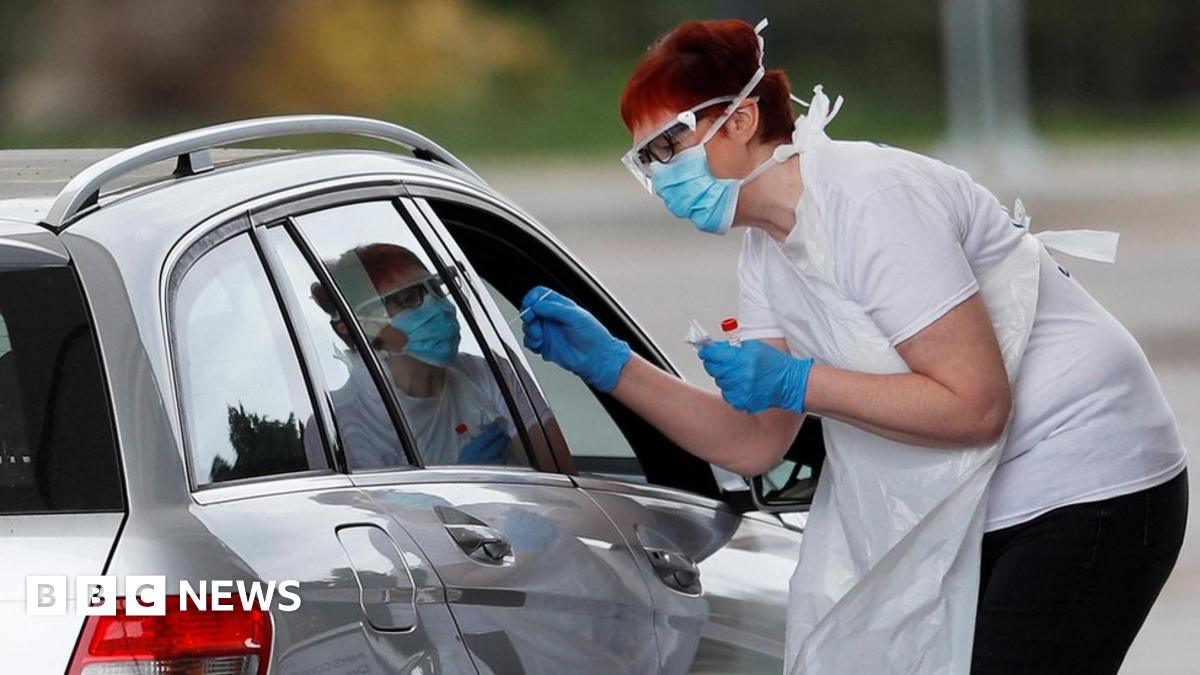
Covid inquiry: The UK pandemic in numbers
Explore the data on how the coronavirus pandemic unfolded in the UK.
 www.bbc.co.uk

TheLocalYokel
Honorary Member Of Forums4airports
- Jan 14, 2009
- 15,694
- 343
- IMPORTANT!! To reduce spam, we request that you make a post soon after completing your registration. We request you keep your account active by posting regularly. Inactive accounts risk being deleted.
- Yes
- Admin
- #680
Edward Colston has long been a controversial figure in Bristol's history. He was a 17th Century Bristol merchant and Member of Parliament. He became a wealthy man and was heavily involved in the slave trade. He was also a philanthropist and bequeathed much of his wealth to the city.
Bristol, London and Liverpool were the major British players in the so-called Triangular Trade that began modestly in the 15th Century and was at its height from the mid 18th to the mid 19th centuries prior to abolition. Much of these cities' wealth accrues directly or indirectly from the slave trade.
Slave ships sailed from England to West Africa to barter copper, trinkets and guns/ammunition with the African kings and other leaders whose economy depended heavily on the slave trade. The African leaders would sell their own people or captives from other kingdoms in exchange for the wares brought out from England. The slave ships then set out for the Caribbean or American colonies packed with slaves who were transported in unimaginable squalor. Many failed to survive the voyages. The ships would offload their human cargo in the New World and return to England with such things as molasses, rum, sugar, tobacco and hemp, bought from the proceeds of selling the slaves.
Colston's name is particularly toxic amongst many people in in Bristol and indeed further afield, not least because of the many references to him in the city: streets, buildings and schools are named after him. It has to be said that there is also a large number of people who believe that Colston is part of the city's history, an enigma to us today because he was both a slave trader and philanthropist, but that's how society was in his day and there are many people who believe that he should be recognised for what he was - good and evil.
Bristol is slowly coming to terms with its slave trade history. The main concert Hall, the Colston hall, is to be renamed and there is a footbridge across part of the Floating Harbour called Pero's Bridge, that commemorates Pero an 18th Century slave who was a servant in the city to a Bristol merchant for many years.
There are those though who believe that the city has not done anywhere near enough to acknowledge its slave trade history. The Bristol band Massive Attack has refused to play at the Colston Hall for many years There are calls from some quarters to rename the iconic Neo Gothic Wills Memorial Building, the magnificent university tower at the top of the steep Park Steet shopping area in the city's West End. It was completed in 1925 following a commission from the Bristol WD & HO Wills tobacco family that flourished through the tobacco they obtained from such places as Virginia that was worked by slaves. No doubt following the defacement of Churchill's statue in London at the weekend there will be further calls to associate Bristol University's past with racism - Churchill was the university's chancellor from 1929 until his death in 1965.
My view is that yesterday's action was an example of mob rule. Once that replaces the democratic process where does society go? The statue would have been removed in due course in the same way that the Colston Hall is to be renamed. To arrive at a situation where the police stand by and do nothing about an act of wanton criminal damage taking place in front of them will encourage other elements whose cause does not encompass a similar moral high ground to do the same.
Remove Advertisements
Subscribe to help support your favourite forum and in return we'll remove all our advertisements. Your contribution will help to pay for things like site maintenance, domain name renewals and annual server charges.



Trending Hashtags
-
#LiverpoolJohnLennonWeight: 3
-
#liverpoolairportWeight: 2
-
#Jet2Weight: 2
-
#EasyJetRoutesWeight: 1
-
#laviationWeight: 1
-
#EasyJetWeight: 1