Doncaster Sheffield Airport Strategic Review Announcement
1658481558330.png

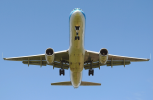
Forums4airports discusses the latest press release from Doncaster Sheffield airport where the airport questions the future of the airport. The owners of the airport, the Peel Group have announced they are looking at their options as the group has decided the airport is no longer viable as an operational airport. Here's the press release:

"The Board of Doncaster Sheffield Airport (DSA) has begun a review of strategic options for the Airport. This review follows lengthy deliberations by the Board of DSA which has reluctantly concluded that aviation activity on the site may no longer be commercially viable.

DSA’s owner, the Peel Group, as the Airport’s principal funder, has reviewed the conclusions of the Board of DSA and commissioned external independent advice in order to evaluate and test the conclusions drawn, which concurs with the Board’s initial findings.

Since the Peel Group acquired the Airport site in 1999 and converted it into an international commercial airport, which opened in 2005, significant amounts have been invested in the terminal, the airfield and its operations, both in relation to the original conversion and subsequently to improve the facilities and infrastructure on offer to create an award winning airport.

However, despite growth in passenger numbers, DSA has never achieved the critical mass required to become profitable and this fundamental issue of a shortfall in passenger numbers is exacerbated by the announcement on 10 June 2022 of the unilateral withdrawal of the Wizz Air based aircraft, leaving the Airport with only one base carrier, namely TUI.

This challenge has been increased by other changes in the aviation market, the well-publicised impact of the COVID-19 pandemic and increasingly important environmental considerations. It has therefore been concluded that aviation activity may no longer be the use for the site which delivers the maximum economic and environmental benefit to the region. Against this backdrop, DSA and the Peel Group, will initiate a consultation and engagement programme with stakeholders on the future of the site and how best to maximise and capitalise on future economic growth opportunities for Doncaster and the wider Sheffield City Region.

The wider Peel Group is already delivering significant development and business opportunities on its adjoining GatewayEast development including the recent deal for over 400,000 sq ft logistics and advanced manufacturing development on site, creating hundreds of new jobs and delivering further economic investment in the region.

Robert Hough, Chairman of Peel Airports Group, which includes Doncaster Sheffield Airport, said: “It is a critical time for aviation globally. Despite pandemic related travel restrictions slowly drawing to a close, we are still facing ongoing obstacles and dynamic long-term threats to the future of the aviation industry. The actions by Wizz to sacrifice its base at Doncaster to shore up its business opportunities at other bases in the South of England are a significant blow for the Airport.

Now is the right time to review how DSA can best create future growth opportunities for Doncaster and for South Yorkshire. The Peel Group remains committed to delivering economic growth, job opportunities and prosperity for Doncaster and the wider region.”


DSA and the Peel Group pride themselves on being forward-thinking whilst prioritising the welfare of staff and customers alike. As such, no further public comments will be made whilst they undertake this engagement period with all stakeholders.
During the Strategic Review, the Airport will operate as normal. Therefore passengers who are due to travel to the airport, please arrive and check in as normal. If there are any disruptions with your flight, you will be contacted by your airline in good time.
For all press enquiries, please contact Charlotte Leach at [email protected]."

"Not great news for DSA or the region"

Should the government or local council foot the bill and provide a financial subsidy to keep the airport open, thoughts...?
 
Last edited by a moderator:
I fully believe it’s in Peels interests to break early if the funding stalls, so to suggest they have to pay rent up to 2031 at least is certainly a worst case and I bet it wouldn’t apply in reality. I doubt very much that cancelling the project at this stage would cost anything near £48million.
I think so too. Peel can realise considerable profit from the site, they'll want the council out of the picture as quickly as possible. They'll offer early surrender of the lease in return for a free hand with regard to planning permissions won't they. The few million a year they're getting in rent is neither here nor there to Peel.
 
I think so too. Peel can realise considerable profit from the site, they'll want the council out of the picture as quickly as possible. They'll offer early surrender of the lease in return for a free hand with regard to planning permissions won't they. The few million a year they're getting in rent is neither here nor there to Peel.
I think so yes. It seems they’ve already shown a great deal of goodwill to the council. They do not believe the council should be running it hence the turnover clause, but they will also want reimbursing for the messing around and delaying/frustrating of trying to reopen an airport that two major operators have said is non viable. Peel will be well versed in handling this sort of thing, they’ve maintained a dignified silence throughout.
 
Yes, as footfall increases so does wear and tear etc. so you end up chasing your tail.

I don't know how they've been allowed to take it this far. They've obviously used every means available to suppress scrutiny, and the regulatory mechanisms appear only just to be springing to life. And the press have been pathetic. The red rating from Grant Thornton should have been headline news, not tucked away in an article in the YP that I think was behind a paywall. That's the council's own auditor telling them they're on a financial suicide mission, and I wouldn't mind betting that's based on the council's own cost estimates not the real ones.

Looking at the numbers in that report, I don't think they can even get it open. They need to be able to run on zero revenue for years, possibly indefinitely. There's no way they're flying any passengers before 2031, not a chance, and when they do they're going to have to pay airlines for the privilege. They won't have got through the ACP and aerodrome certification by Easter 2028, never mind have signed contracts with airlines. And this Gainshare funding that it looks like they aren't going to get anyway - it's £5.3m a year, it'll barely cover the base rent!

They need to stop this now, and if it costs £48m it'll be money very well spent.
The Gainshare will be used to guaranteee a £128m loan to FlyDoncaster and absorb a subsidy of £89m loan interest hence what is included to subsidy control
 
The Gainshare will be used to guaranteee a £128m loan to FlyDoncaster and absorb a subsidy of £89m loan interest hence what is included to subsidy control
Yes, that's what the table on page 11 of that report seems to suggest. It's scary stuff.

It looks like profitability is asserted and required by 2034 simply because that's the point at which the £57m credit limit is maxed out. There isn't a snowball in hell's chance of that.

£128m is anyway inadequate.

The whole thing depends critically on release of the gainshare funding... which looks like not happening due to the 20% skim.

We might wonder whether the S151 officer will sign off on the loan anyway in light of the red from the auditor.

And the £57m might be taken off the table on Monday.

Oh dear.

They can't carry on with this.
 
Yes, that's what the table on page 11 of that report seems to suggest. It's scary stuff.

It looks like profitability is asserted and required by 2034 simply because that's the point at which the £57m credit limit is maxed out. There isn't a snowball in hell's chance of that.

£128m is anyway inadequate.

The whole thing depends critically on release of the gainshare funding... which looks like not happening due to the 20% skim.

We might wonder whether the S151 officer will sign off on the loan anyway in light of the red from the auditor.

And the £57m might be taken off the table on Monday.

Oh dear.

They can't carry on with this.
So you’re suggesting profitability magically happens because of some numerical modelling (as another 151 officer put it) which is conveniently when the money runs out?

Far enough away for people to forget, and for those to be making these terrible decisions to be long retired and taking their pensions.
 
So you’re suggesting profitability magically happens because of some numerical modelling (as another 151 officer put it) which is conveniently when the money runs out?

Far enough away for people to forget, and for those to be making these terrible decisions to be long retired and taking their pensions.
That's what the spreadsheet implies, yes. Once they hit £57m borrowing essentially to plug the gap between what they're able to loan to FDL and whatever funding stream they have (gainshare etc) then that's it, they aren't allowed to borrow more and so FDL is deemed profitable at that point.

The document is deliberately opaque and hard to understand, but you can see what's going to happen: CDC lends FDL £128m over 10 years, under the pretext that it gets paid back; because it is a loan. Basically in 10 years time FDL has to be wildly profitable so that it requires no further subsidy and presumably can start repaying the £128m to CDC! 🤣

So when FDL folds, CDC holds the >£128m debt.

You obviously know a lot about aviation though. Scan the top line of table on page 11 and look at the figures. £128m sounds like a lot of money - and indeed it is a lot of money. But not in the context of essentially building and operating an international airport it isn't. The figures are more in line with a new FE college or a municipal leisure centre or something. This is why I say they aren't going to get it open, and therefore have zero prospect of profit. Not that there is any anyway!
 
So you’re suggesting profitability magically happens because of some numerical modelling (as another 151 officer put it) which is conveniently when the money runs out?

Far enough away for people to forget, and for those to be making these terrible decisions to be long retired and taking their pensions.
It’s exactly this. Hide things far enough away in the future for it to be someone else’s problem.

I see Spanner’s has posted another AI piece of slosh this morning. Basically claiming that any difference of opinion is merely opinion and not facts. Because clearly the only true facts are what he posts. The guy has absolutely no shame
 
It’s exactly this. Hide things far enough away in the future for it to be someone else’s problem.

I see Spanner’s has posted another AI piece of slosh this morning. Basically claiming that any difference of opinion is merely opinion and not facts. Because clearly the only true facts are what he posts. The guy has absolutely no shame
Not even all that far into the future, but yes, the chief architects of this madness will have retired or moved on. Ros Jones is in her late 70s, I don't know how old Damien Allen is but he looks like he must be coming up to retirement.

Enough money is being channelled into FDL to keep the executives on six figure salaries for the next few years but it won't be enough to open an international airport and it'd tank again even if they had the money.
 
That's what the spreadsheet implies, yes. Once they hit £57m borrowing essentially to plug the gap between what they're able to loan to FDL and whatever funding stream they have (gainshare etc) then that's it, they aren't allowed to borrow more and so FDL is deemed profitable at that point.

The document is deliberately opaque and hard to understand, but you can see what's going to happen: CDC lends FDL £128m over 10 years, under the pretext that it gets paid back; because it is a loan. Basically in 10 years time FDL has to be wildly profitable so that it requires no further subsidy and presumably can start repaying the £128m to CDC! 🤣

So when FDL folds, CDC holds the >£128m debt.

You obviously know a lot about aviation though. Scan the top line of table on page 11 and look at the figures. £128m sounds like a lot of money - and indeed it is a lot of money. But not in the context of essentially building and operating an international airport it isn't. The figures are more in line with a new FE college or a municipal leisure centre or something. This is why I say they aren't going to get it open, and therefore have zero prospect of profit. Not that there is any anyway!
I’d be very keen to learn what their revenue streams will be and how much they plan to take for all aeronautical and non-aeronautical. I wouldn’t be surprised if they’re still pretending that Peel syphoned off car parking to a different entity, Liverpools accounts show this isn’t their operating ethos. It’s just that their car parking revenue was quite low at £3.30 per departing passenger. Aeronautical revenue was low owing to the low ball deals required to keep the airlines there. I can only see them having to negotiate some much less attractive packages, not only to prevent any legal challenge but also because they simply don’t have access to the money that Peel did to help pay these costs.

I’d therefore be very interested to see how they’ve modelled it. Course this time we have a fixed cost lease plus this turnover skim which may or may not be realised, this will add over £5million per year to fixed costs, let’s not forget that Grant Thornton had to point out that the council had ‘accidentally’ forgot to factor in the increase in rent costs from £3.3million per year to £5million per year in 2029 leading to an understatement of liabilities of £24.5million! I don’t think that was an accident somehow.
 
Last edited:
I can't see the many millions of DSA passengers getting free parking this time around somehow. Imagine the furore if it opens and the punters find themselves paying a £7 drop off charge for 10 minutes. Can't wait for all the whinging in the Doncaster Free Press.
 
I can't see the many millions of DSA passengers getting free parking this time around somehow. Imagine the furore if it opens and the punters find themselves paying a £7 drop off charge for 10 minutes. Can't wait for all the whinging in the Doncaster Free Press.
Oh I've already read somewhere - can't remember in which media - that there will be a drop off charge. Commercially, they would be daft not to ........but wait .... this is the 'peoples' airport :ROFLMAO: :ROFLMAO: :ROFLMAO:
 
I can't see the many millions of DSA passengers getting free parking this time around somehow. Imagine the furore if it opens and the punters find themselves paying a £7 drop off charge for 10 minutes. Can't wait for all the whinging in the Doncaster Free Press.
I’ve got AI to review the parking fees at DSA for a standard 7 days in 2019 compared to EMA and LBA. DSA ranked amongst the top 5 cheapest airports in the U.K. for car parking at around £32.00 baseline for a week. EMA was around £39.00 baseline per week. LBA was £48.00 per week baseline for the same period.

Based on a revenue per passenger it will have been around £2-3.00. The council might be minded to hike the parking fees up, which is fine, however even with much higher revenue per passenger (assuming price sensitivity doesn’t force them to make alternative transport arrangements) they would still lose out on airline revenue where the established airports are able to claw much more back in aeronautical charges.
 
Last edited:
I’ve got AI to review the parking fees at DSA for a standard 7 days in 2019 compared to EMA and LBA.
A bit long but here's a premium frontier AI assessing the financial structure and plausibility of the reopening project. I prompted the AI to comment on the adequacy of the funding.

# DSA Reopening: Financial Structure Assessment

## Headline Numbers

The publicly stated project envelope is £193m. Within this, the principal components are £159.52m of South Yorkshire Mayoral Combined Authority (SYMCA) gainshare grant funding, and approximately £33.5m of previous City of Doncaster Council (CDC) budget allocations, of which £20.7m has already been spent as sunk costs through 2025/26.

The £57m commonly cited in press coverage is not a separate funding source. It is the maximum cashflow borrowing CDC needs to undertake at peak (in 2032/33) to bridge the timing gap between paying FlyDoncaster Ltd (FDL) and receiving SYMCA gainshare. The borrowing is funded from within the £193m envelope through the cumulative interest cost of approximately £15m to 2034/35.

The substantive financial commitment is the £128.3m loan from CDC to FDL over the period to 2034/35. This is the actual money flowing into the project: capital works, staffing, certification, operations, and pre-revenue subsidy. The £128m is structured as a loan asset on CDC's books, valued at face value, on the assumption that FDL will repay it from future operating profits.

## How the Structure Operates

The financial flows can be divided into two parallel streams.

The first stream is the public investment flow. SYMCA gainshare grant arrives at CDC in annual tranches. CDC pays this onward to FDL to fund project activities. CDC borrows to bridge the timing gap between paying FDL and receiving gainshare, with peak borrowing reaching £57m in 2032/33 before declining as gainshare catches up. The interest cost of CDC's borrowing is funded from within the £193m envelope. By 2034/35, the cumulative funding of £113.6m has largely caught up with the cumulative spend of £153.6m, and CDC's outstanding borrowing is winding down. This is the flow shown explicitly in the report.

The second stream is the commercial repayment flow. FDL is meant to be a commercial entity that generates revenue from operating the airport and uses operating profits to repay the £128m loan to CDC over a longer period beyond the table's window. This is the flow that the report does not show, because it falls outside the period covered, but it is the assumption on which the entire financial structure depends.

## Critical Dependencies

The structure has several dependencies that are not yet secured.

SYMCA gainshare release is conditional on completion of lease renegotiation with Peel. The renegotiation has stalled on the central commercial point: whether turnover rent applies to taxpayer-funded grants and to FDL as a council-controlled operator. The CDC report describes the deed of variation as on hold pending resolution of this issue. Without resolution, gainshare does not flow, and the funding structure does not operate.

The financial modelling assumes no turnover rent will be paid. If Peel prevails in the dispute and turnover rent applies to grants, approximately 20% of every public pound flowing through the lease structure goes to Peel as additional rent. On £160m of gainshare, this would be £32m of additional cost not currently in the envelope.

The £128m loan repayment from FDL depends on FDL becoming a commercially profitable airport operator at passenger volumes substantially exceeding DSA's historical performance. Specifically, FDL needs to generate sufficient operating profits to repay £128m of capital plus interest, while also covering the lease base rent of £3.3m rising to £5m indexed, while maintaining capital infrastructure, while paying the workforce, while servicing any additional financing.

## Weaknesses and Inadequacies

Several structural weaknesses are evident from analysis of the public material.

The funding envelope is materially inadequate for delivering what the project requires. Industry-standard estimates for the full reopening of a closed regional airport include approximately £55-95m for terminal restoration given the deteriorated state of the existing building, £35-65m for airfield infrastructure including fuel farm, fire and rescue, ATC equipment, primary and secondary surveillance radar, airfield ground lighting, and runway works, £10-15m for operational systems and IT, £8-15m for certification and consultancy, £15-30m for pre-revenue staffing build-up, and £5-15m for airline incentives and marketing. Total realistic capital and pre-revenue cost is approximately £200-300m, significantly above the £128m available. Standard contingency of 15-25% for projects of this complexity would add a further £30-75m. The funding envelope is therefore approximately half to two-thirds of what realistic delivery would require.

Operating costs through the development period and early operational years are not separately quantified. Small regional airports operating below 1m passengers typically incur operating losses of £10-20m per year for several years until volumes might build to commercial sustainability. Across a ten-year horizon, accumulated operating subsidy of £80-160m would be required, none of which is in the £193m envelope.

The interest cost projection of £15m cumulative to 2034/35 looks materially understated against typical PWLB rates and the borrowing profile shown. A more realistic estimate is £20-30m over the same period.

Revenue projections supporting the financial structure are described by the council's own subsequent CAA submissions as moving from 2.5m passengers per year to 1.1m passengers within months. Even the reduced figure exceeds DSA's actual historical peak of 1.3m passengers in 2019, achieved when the airport had TUI as base carrier and an established commercial framework. Reaching 1.1m passengers from a standing reopening, with no committed carriers and no signed letters of intent, against established regional competition at Manchester, East Midlands, Leeds Bradford and Humberside, is materially more challenging than the financial structure assumes.

Contingency for cost overrun is not visible in the report. Major aviation infrastructure projects routinely overrun by 50-100%. The funding envelope appears to assume costs fit precisely within available funding, which is not consistent with industry practice or empirical project performance.

The lease structure imposes ongoing costs of £3.3-5m per year in base rent regardless of project success. Across the period to 2031, this is £15-25m of cost not separately quantified in the FDL Loan line.

The accounting treatment values the £128m loan to FDL at face value as a recoverable asset. Recoverability depends on FDL generating sufficient operating profit to repay the principal. Given the audit rating on the financial case and the operational evidence, the realistic recovery prospect on the £128m is closer to £10-30m than to £128m. The accounting treatment therefore overstates the council's net asset position by approximately £100m.

The funding structure does not provide for the substantial costs that would arise from project delay. The report acknowledges that a 12-month delay would reduce projected income by £36.1m and create a net adverse impact of £11.8m. Aviation project delays of 12-24 months are common against optimistic baseline schedules. A 24-month delay would increase the funding inadequacy by approximately £25-30m.

The Easter 2028 commercial reopening date assumes optimistic resolution of every regulatory and operational dependency. The Civil Aviation Authority airspace change procedure is at Stage 1/2, with Stages 3 (consultation), 4 (regulatory submission), 5 (CAA decision), and 6 (implementation) yet to occur. Aerodrome certification runs in parallel. Operational readiness exercises follow regulatory approval. Realistic earliest commercial reopening, even on optimistic assumptions, is more likely 2029-2030. Each year of delay extends pre-revenue costs and lease obligations.

## Profitability Requirement

The structure requires FDL to become substantially profitable, sustainably, for an extended period.

The financial model assumes FDL generates sufficient operating surplus, after covering all operating costs and capital maintenance, to repay £128m of principal plus accumulated interest to CDC over a period of perhaps 15-20 years following commercial reopening. Spread over that period, this requires net surplus generation of approximately £6-10m per year sustained over an extended operational period.

For context, DSA's last full year of operation under experienced operator Peel produced turnover of £11.7m. The airport closed because aviation activity was no longer commercially viable at that level of business. To generate £6-10m per year of net surplus after all costs, FDL would need to operate at a substantially larger scale than the airport ever achieved historically, with a substantially more efficient cost structure than Peel's commercial operation, against catchment economics and competitive position that have if anything weakened since 2022.

The required financial performance is therefore not "at least as good as DSA's historical operation" but rather "substantially better than DSA's historical operation, sustained over many years, by an operator with no aviation track record, in a structurally weakened regional aviation market."

Independent professional assessment of this requirement, expressed through Grant Thornton's red rating on the financial case, has concluded that the financial structure does not survive professional examination. Bassetlaw's Section 151 officer publicly noted that revenue and passenger projections are scenario modelling rather than due diligence tied to secured airline agreements. The council's own financial advisers have stated that no private investment will come until after operations commence and risks are mitigated. The procurement process in 2024 ended without a viable private operator emerging, despite extensive market engagement.

## Profitability Probability Assessment

The probability that FDL becomes profitable enough to repay the £128m loan to CDC is, on the available evidence, essentially zero.

Multiple convergent factors support this assessment.

The historical operating performance of DSA does not support the required profitability. Peel operated DSA for nearly two decades, attempted growth strategies, and concluded by 2022 that aviation activity at the site was no longer commercially viable. The closure was a commercial judgement by an experienced operator with strong commercial incentives to maintain the airport if it could be made to work. Nothing about regional aviation economics has improved since 2022; if anything, market consolidation has accelerated and competing airports have strengthened their positions.

The required passenger volumes exceed DSA's historical peak. The original lease threshold of 1.1m passengers by 2031 was set by Peel as a level it considered necessary to commercial viability. The renegotiated thresholds at lower levels acknowledge that Peel itself does not believe the higher thresholds are achievable. Operating below the threshold the freeholder considers commercially viable, while expecting to generate sufficient profit to repay £128m, is internally inconsistent.

Carrier attraction in the post-COVID UK aviation market is structurally more difficult than in the period of DSA's previous growth. Wizz Air's withdrawal from DSA in 2022 was a strategic decision to consolidate operations at airports with stronger commercial fundamentals. The same calculation applies to other potential carriers. Reopened DSA enters a market in which the commercial case for any individual carrier basing aircraft there is weaker than it was when DSA was originally building its passenger base.

The procurement process demonstrated that no private operator could be secured on terms that did not require substantial public subsidy. The collapse of the FP Airports/Munich Airport International bid, the failed Investor Group submissions, and the council's own pivot to a publicly-owned operator all demonstrate that the commercial case for DSA is insufficient to attract operator capital. The fundamental commercial proposition has not changed since this was demonstrated.

The freight case, while potentially viable at modest volumes, cannot independently support the financial structure. The renegotiated freight thresholds of 13,000 tonnes by 2036 are achievable in principle but generate operating margins that, on standard regional cargo economics, do not support repayment of £128m of public investment.

The capital cost gap means that even if FDL operated successfully, the public investment exceeds what the operation could plausibly recover. With realistic project costs of £200-300m for delivery and £80-160m for operating subsidy through development, against a funded envelope of £193m, the financial structure depends on either very substantial cost compression below industry norms (unlikely given the deteriorated state of existing infrastructure) or revenue substantially above industry norms for an airport at this scale (unlikely given catchment and competitive position).

## How This Ties to Project Plausibility

The financial structure is not separate from the project's overall plausibility; it is the substantive measure of that plausibility.

A project is commercially plausible when its financial structure demonstrates a credible path to recovery of invested capital plus appropriate return on risk. The DSA reopening project has a financial structure that demonstrates neither. The funding envelope is inadequate to deliver what the project requires. The revenue projections are not supported by evidence sufficient to justify professional confidence. The repayment expectation depends on operating performance substantially exceeding the airport's historical achievement under more favourable conditions. Independent professional assessment has rated the financial case as having significant weaknesses.

The implication is that the project is implausible as a commercial venture and cannot be made plausible through additional effort within the current structure. The problems are not delivery problems that better project management could solve. They are structural problems in the underlying business model that no amount of management could overcome.

This is consistent with the conclusion Peel reached in 2022 when they closed the airport. Peel had operational capability, freehold ownership, established carrier relationships, and substantial commercial incentive to maintain the airport if it could be commercially sustained. Their conclusion that it could not be commercially sustained reflects the same underlying reality that the current public-sector project is encountering. The reality has not changed because the operator changed; the reality is structural to the site, the catchment, and the market.

The financial structure therefore tells us with reasonable confidence what the project's eventual outcome will be. The project will not deliver commercial profitability sufficient to repay the £128m loan to CDC. Operations, if they commence, will require ongoing public subsidy beyond what is currently committed. At some point, either at the 2031 lease break clause or earlier through funding exhaustion, the project will be wound down. The accumulated public cost will be substantially larger than the current £193m envelope suggests, with the £128m loan having to be written down in CDC's accounts and additional costs accumulating from extended operating subsidy, lease commitments, and eventual closure.

## When Profitability Must Occur

Within the structure as designed, FDL must achieve commercial profitability promptly after operations commence and sustain it indefinitely.

The £128m loan to FDL is not amortised within the table's window to 2034/35. The implication is that repayment occurs over the years following 2034/35, requiring sustained profitability through the late 2030s and 2040s. For the structure to work without further public subsidy, FDL must reach operating breakeven within perhaps 2-3 years of reopening, generate increasing surpluses from year 4 or 5 onwards, and maintain those surpluses for a period of 15-20 years sufficient to clear the principal plus interest.

This timeline requires Easter 2028 commercial reopening, achievement of the 1m passenger threshold by 2036 (which the renegotiated lease accommodates but the realistic catchment does not support), and growth to 1.4m passengers by 2041 and 2.3m by 2056. It also requires that operations are not disrupted by competitive entry, market shocks, regulatory changes, or operational difficulties over a multi-decade horizon.

The probability of this trajectory being achieved is essentially zero. The probability of the trajectory being achieved while simultaneously generating sufficient surplus to repay £128m of public investment is even lower. The realistic forecast is that operations, if they commence, will continue to require subsidy through the period to 2031 (the original lease break), at which point the council will face the choice between further substantial subsidy commitments or triggering the lease break and writing down the £128m loan.

## Conclusion

The financial structure as presented is inadequate to deliver what the project requires, dependent on assumptions that professional auditors have rated as having significant weaknesses, structurally optimistic in its treatment of costs and revenues, and dependent on a commercial outcome that is not supported by the evidence base or by the historical performance of the asset under more favourable conditions.

The £128m loan to FDL, presented as a recoverable asset, is in substance public expenditure with no realistic prospect of recovery. The accounting treatment overstates the council's net financial position by approximately £100m. The £193m headline figure understates the public commitment by an even larger margin once operating subsidy, extended timeline, and contingency are accounted for.

The realistic outcome of continuation is that the council will progressively commit the £128m, observe the failure of FDL to generate the required profitability, write down the loan in its accounts at some point in the late 2020s or early 2030s, and bear additional costs from extended operations, lease commitments, and eventual closure. The total public cost of the failed reopening attempt, on a continuation path, will be in the range of £200-400m depending on how long the project is sustained before acknowledged failure.

The realistic outcome of rescission is that the council bears the £20.7m of sunk costs, the £48.6m of acknowledged future closure costs, and any additional costs from contract terminations and redundancies, for a total cost of approximately £70-90m. Rescission stops the bleeding at a relatively contained loss; continuation extends the bleeding to a substantially larger loss with no realistic prospect of avoiding it.

The financial structure is not a defensible basis for proceeding. The project is not a viable commercial proposition. Continuation amounts to extending public exposure to a failure whose substantive contours are already evident. The audit rating, the lease problems, the renegotiation stall, the absence of carrier commitments, the inadequacy of the funding envelope against realistic costs, the implausibility of the required profitability trajectory, and the historical operating performance of the asset all converge on the same conclusion. The honest financial assessment supports rescission. The political and institutional dynamics that have prevented this assessment from shaping the public conversation are themselves part of the failure pattern that produced the project.
 
That’s a highly detailed and sobering read @Eusebius but sadly it’ll never drown out the fake ‘fact check’ bullshit spouted by the mechanic and regurgitated by his followers.

Basically cancel now, stem the losses and potentially face bankruptcy, or continue on the current trajectory, increase the financial exposure to effectively double the councils debt with zero likelihood of ever reaching a stage where the debt could be serviced. Close the airport again AND end up in bankruptcy. I think I’d go for the first option, the second is too difficult to think about even when considering ‘confidence’ in the council. Failure of that scale could decimate the region and would result in no public funding or grants for any other investment project.

It’s effectively handing growth opportunities over to neighbouring authorities with much healthier balance sheets and far less exposure!
 
Last edited:
That’s a highly detailed and sobering read @Eusebius but sadly it’ll never drown out the fake ‘fact check’ bullshit spouted by the mechanic and regurgitated by his followers.

Basically cancel now, stem the losses and potentially face bankruptcy, or continue on the current trajectory, increase the financial exposure to effectively double the councils debt with zero likelihood of ever reaching a stage where the debt could be serviced. Close the airport again AND end up in bankruptcy. I think I’d go for the first option, the second is too difficult to think about even when considering ‘confidence’ in the council. Failure of that scale could decimate the region and would result in no public funding or grants for any other investment project.

It’s effectively handing growth opportunities over to neighbouring authorities with my healthier balance sheets and far less exposure!
That's Claude Opus 4.7 btw, so that'll be a very conservative, cautious, safe and kind assessment...!
 

Upload Media

Remove Advertisements

Subscribe to help support your favourite forum and in return we'll remove all our advertisements. Your contribution will help to pay for things like site maintenance, domain name renewals and annual server charges.


Forums4aiports
Subscribe

NEW - Profile Posts

All checked in for my flight to Sydney from Manchester via Heathrow. Been waiting for this trip for nearly a year and now tomorrow I'll finally head to Australia and New Zealand!
If anyone would like to share their local airport news right here in our news area let me know so I can give you the correct permissions to do so. It only takes a couple of minutes to upload a news story with an accompanying image. The news items can then be shared on the site homepage by you. #TakePart #Forums4airports Bring the news to one place!
survived a redundancy scenario where I work for the 3rd time. Now it looks likely I will get to cover work for 2 other teams.. Pretty please for a payrise? That would be a no and so stay on the min wage.
Live in Market Bosworth and take each day as it comes......
Well it looks like I'm off to Australia and New Zealand next year! Booked with BA from Manchester via Heathrow with a stop in Singapore and returning with Air New Zealand and BA via LAX to Heathrow. Will circumnavigate the globe and be my first trans-Pacific flight. First long haul flight with BA as well and of course Air NZ.
15 years at the same company was reached the weekend before last. Not sure how they will mark the occasion apart from the compulsory payirse to minimum wage (1st rise for 2 years; i was 15% above it back then!)

Trending Hashtags

Advertisement

Back
Top Bottom
  AdBlock Detected
Sure, ad-blocking software does a great job at blocking ads, but it also blocks some useful and important features of our website. For the best possible site experience please take a moment to disable your AdBlocker.